

Our CO-NELE is professional and large manufacturer since 1993, located in Qingdao, a beautiful coastal city. As a top supplier of all kinds of concrete mixers, we provide reliable concrete mixer machine solutions for global clients looking for concrete mixer for sale.
Wide Product Range
We mainly produce twin shaft mixer, double screw belt mixer, dry mortar mixer, laboratory mixer, asphalt mixer, continuous concrete mixer, concrete batching plant, dry mortar mixing plant, fly ash solidification mixing plant and other series of equipments, etc. Our lineup covers standard commercial concrete mixer, heavy-load heavy duty concrete mixer, factory-grade industrial concrete mixer, fully automated automatic concrete mixer, dedicated mud mixer concrete mixer for sludge disposal, and cost-effective models including 3 yard concrete mixer. We also supply matched transport equipment like concrete mixer truck for sale and brand-new new concrete mixer truck for sale.
Wide Range of Applications
Our products are mainly used in concrete industry, solid waste treatment, sludge treatment, fly ash solidification, medical waste treatment, incineration slag, oilfield sludge treatment, soil remediation and other industries, etc.
Construction projects rely on our durable big concrete mixer, compact 3 yard concrete mixer for sale, and budget-friendly cheap concrete mixer.
Environmental sludge treatment projects prefer our specialized mud mixer concrete mixer, and you can consult our team for transparent mud mixer concrete mixer price.
Ready-mix batching plants adopt our automatic concrete mixer and commercial concrete mixer for stable mass production.
Factories with uninterrupted production lines select our continuous concrete mixer and heavy-duty industrial concrete mixer. If you need complete mixing & transport solutions, we offer one-stop service for concrete mixer machine for sale alongside electric concrete mixer for sale and mixer trucks.
Advanced Equipment
We have professional production equipment such as Austrian IGM welding robot, PENTALASER 12000W laser cutting equipment, Japan FANUC welding robot, CNC vertical lathe, Fully automatic shot blasting and paint baking room, Digital workshop. Every new concrete mixer rolling off our production line undergoes strict testing, so all our concrete mixer for sale deliver stable quality with competitive concrete mixer price and clear concrete mixer machine price.
Products Sell Well
We export to more than 80 countries like Germany, America, England, Indonesia, Thailand, Vietnam, Russia, Belarus, Brazil, South Africa, Algeria, Nigeria, Australia, UAE, Saudi Arabia, etc. Global buyers favor our full series including electric concrete mixer for sale, heavy duty mixing equipment, and flexible 3 yard concrete mixer for sale, with no hidden fees on all quotation lists.


Advantages of Concrete Mixer
Increased Efficiency And Productivity
By being able to mix concrete on-site, you eliminate the need for time-consuming transportation and storage of pre-mixed concrete. This means that you can adapt to changing project needs and minimize downtime, resulting in faster completion times and improved productivity.
Cost Savings And Reduced Waste
By eliminating the need for pre-mixed concrete, you eliminate transportation costs, storage fees, and the risk of concrete spoilage.
Flexibility And Convenience On Construction Sites
When it comes to construction projects, flexibility and convenience are crucial. A mobile concrete mixer offers unparalleled flexibility by allowing you to mix concrete on-site.
Improved Quality Control And Consistency
With a mixer, you have complete control over the mix design, allowing you to adjust it to your precise specifications. This level of customization ensures that the concrete you produce meets the required strength and durability standards for your project.
Environmental Benefits Of Using a Mobile Concrete Mixer
By mixing concrete on-site, you minimize the waste associated with pre-mixed concrete, reducing the environmental impact of your construction projects. Additionally, a mobile concrete mixer eliminates the need for transportation of pre-mixed concrete, which in turn reduces carbon emissions and energy consumption.
Versatility For Different Types Of Construction Projects
A mobile concrete mixer offers versatility that is unmatched by traditional concrete mixing methods. Whether you’re working on a small residential project or a large-scale commercial development, a concrete mixer can handle the demands of any construction site.
Features of Concrete Mixers

Mixing Capacity
A mixer’s mixing capacity is approximately 80% of the volume of the drum. If you had a 150-litre drum, this would yield around 120L of concrete.
Speed of Mixing
To achieve the desired consistency, the mixing speed is frequently necessary. At mixing speed, no more than 100 rotations should be utilized. All rotations beyond 100 should be at an agitation speed, as specified by the manufacturer. Agitating speed is typically 2 to 6 revolutions per minute, whereas mixing speed is typically 6 to 18 revolutions per minute.
Durability and Longevity
In general, the service life of a steel alloy concrete mixer truck is 50,000-80,000 cubic metres. Concrete mixer truck stir blades have a lifetime of only 30,000 to 40,000 cubic metres.
Types of Concrete Mixer
Batch Mixer
A batch mixer is a mixer that creates small to medium-sized batches of concrete for usage on a project or construction site. Both the drum and pan mixers have rotating blades which mix together the combination of water, aggregate, and cement.
Drum Mixer
Drum mixers are named for their conical shape that looks similar to a drum. These mixers come in a number of configurations which can be used depending on the type of mixture and project site.
Tilting Mixer
The tilting drum mixer is one that can be controlled and tilted on an axis to make pouring concrete easier. These mixers are typically used on sites where a generous amount of concrete is needed on a lower level.
Non-Tilting Mixer
A non-tilting drum mixer mixes concrete at a horizontal axis. With no tilting ability, this configuration requires an incline chute to collect the concrete mixture.
There is an intake and a discharge area whereby the ingredients are poured into the intake and the concrete mixtures are poured out of the discharge once mixed together.
Reversing Mixer
Similar to the non-tilting mixer, the reversing mixer is stationary on a horizontal axis. However, instead of offering separate intake and discharge areas, both utilize the same opening.
Pan Mixer
A pan mixer operates in much the same way as a drum mixer; the main difference is that the pan mixer utilizes a cylindrical pan instead of a drum.
Continuous Mixer
Other than the batch mixer, the other type of mixer is a continuous mixer. These mixers (as their name implies) continuously load, mix, and discharge the concrete mix.
Components of Concrete Mixer
Aggregate Bunkers
These are the storage units where sand, gravel and other aggregates are stored.
Conveyor Belts
These are the belts used for the transportation of aggregates from storage areas to concrete plants. Weighing Systems: These are the systems where components such as sand, gravel, water, and cement are weighed in the proper amount.
Mixer
It is the section where the concrete mixture is prepared. Concrete mixers can be stationary or mobile and have a variety of capacities.
Silo
These are the storage areas where cement and other dusty materials are stored. Silos can be of high capacity and used to store cement, limestone, sawdust, and other additives.
Control Room
It is the center where all components of the concrete plant are controlled. The amount of constituents of the concrete mix and the mixing ratios are set here.
Water Tank
It is employed to store the water used in the preparation of the concrete mix.
Pneumatic System
It is used to provide the air pressure needed for the transportation of the concrete mix.
Electricity and Generator System
It is necessary for the operation of all electrical components in the concrete batching plant.
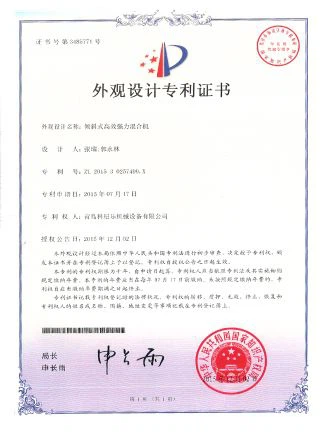
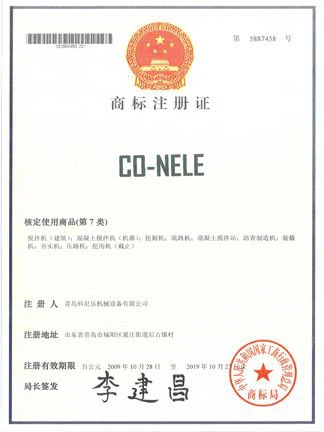
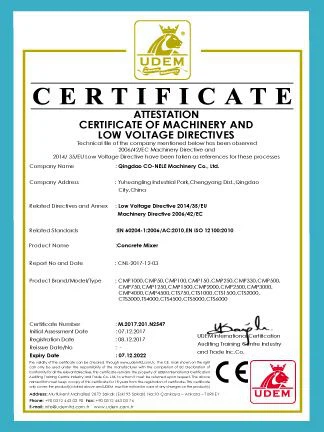
Certificate


Frequently Asked Questions
As one of the leading concrete mixer manufacturers and suppliers in China, we warmly welcome you to buy high quality concrete mixer made in China here from our factory. For more information, contact us now.