

Our CO-NELE is professional and large manufacturer since 1993, located in Qingdao, a beautiful coastal city.
Wide Product Range
We mainly produce twin shaft mixer, double screw belt mixer, dry mortar mixer, laboratory mixer, asphalt mixer, continuous mixer, concrete batching plant, dry mortar mixing plant, fly ash solidification mixing plant and other series of equipments, etc.
Wide Range of Applications
Our products are widely used in industries such as building materials, special mortars, floorings, wall coatings, refractory materials, and ceramic materials.
Advanced Equipment
We have professional production equipment such as Austrian IGM welding robot, PENTALASER 12000W laser cutting equipment, Japan FANUC welding robot, CNC vertical lathe, Fully automatic shot blasting and paint baking room, Digital workshop
Products Sell Well
We export to more than 80 countries like Germany, America, England, Indonesia, Thailand, Vietnam, Russia, Belarus, Brazil, South Africa, Algeria, Nigeria, Australia, UAE, Saudi Arabia, etc.


Advantages of Dry Mortar Mixer
Transported Simple
Dry-mix mortar can be transported simple container, stirred automatically, pumped and applied by machine, thus making work efficiency to 500-600%. Stirring and applying by machine also ensures mortar can be processed and used correctly, avoiding water added too less or much, or other potential mistakes during formulation or inexperienced workers. It can make quality stable and durability longer.
Improvement of Structure
Dry-mix mortar helps the improvement of industrial structure, modernizes the construction industry, reduces cement waste and project cost.
Environmental Friendly
Dry-mix mortar as a thermal insulation and environmental friendly material, can contribute to energy saving and emission reduction, which should be promoted on large scale.
Economic Benefits
Dry-mixed mortar brings significant economic benefits, while ensuring quality, the thickness of dry mixed mortar can be reduced, saving materials, and reducing material loss during transportation and use. The use of dry mixed mortar can improve work efficiency by 5-6 times.
Versatility
The variety of dry mixed mortar products is complete, which can meet different engineering requirements.
Application of Dry Mortar Mixer Machine
Bonding Mortar
Such as tile adhesive, caulking agent, special bonding mortar, thermal mortar, etc.;
01
Plastering Mortar
Such as interior and exterior wall plastering, putty, colored decorative mortar, partition Thermal insulation mortar, etc.;
02
Masonry Mortar
Such as ordinary masonry mortar, special thin-bed mortar for concrete blocks, thermal insulation masonry mortar, etc.;
03
Perfect product system
Such as ordinary floor mortar, self-leveling mortar, etc.;
04
Special Mortar
Repair mortar, waterproof mortar, hardening powder, etc.
05
Types of Dry Mortar Mixer Machine
Tilting Drum Mixer
Tilting Drum Mixers are designed with a tilting drum that can be rotated to pour out the mixed concrete or cement, making them a popular choice for construction projects where material needs to be quickly unloaded. These mixers consist of a drum tilted on its axis allowing the mixed material to be poured out of the drum into a designated area.
Non-Tilting Drum Mixer
Unlike Tilting Drum Mixers, Non-Tilting Drum mixers do not have a tilting mechanism and rely on manual labour to unload the mixed material. One of the advantages of this concrete mixer is their simple design and easy operation.
Reversing Drum mixer
A reversing drum mixer’s drum can rotate in both directions, allowing the mixing blades to effectively mix the material. The drum has mixing blades or fins attached to the inside of the drum to help mix the material.
Pan-Type Concrete Mixer
It is also known as a circular mixer or a pan mixer because of its circular-shaped mixing pan. This concrete mixer consists of a circular mixing pan that is mounted horizontally on a frame with wheels.
Components of Dry Mortar Mixer Machine
Screw Conveyor
The screw conveyor is used for conveying cement and additives and has a compact design with a small footprint. It has high conveying efficiency and can effectively avoid material separation.
Belt Conveyor
Belt conveyor is mainly used for conveying aggregates, with fast conveying speed and smooth running. The belt material is wear-resistant and has a long service life.
Mixing System
The mixing system is the core part of the dry mortar mixing plant, which adopts high-efficiency double horizontal shaft mixer with even mixing and high efficiency. The mixer is equipped with wear-resistant liner to reduce wear and prolong service life.
Control system
The control system adopts advanced PLC control technology to realize fully automatic operation. The system interface is friendly and easy to operate, and it can monitor the parameters in the production process in real time to ensure the stability and accuracy of production.
Dedusting system
Dedusting system is used to deal with the dust generated in the production process, mainly including bag duster and pulse duster. With high dust removal efficiency, it can effectively improve the production environment and reduce the pollution to the outside world.
Pneumatic System
The pneumatic system is responsible for driving all kinds of pneumatic valves and cylinders to ensure accurate material conveying and dosing. The system is equipped with air compressor and air storage tank to provide stable air source support.
Electrical System
The electrical system includes electric control cabinet, cables and various electric components to ensure the power supply and control of the whole mixing plant. The electrical system is reasonably designed with compact layout for easy maintenance and overhaul.
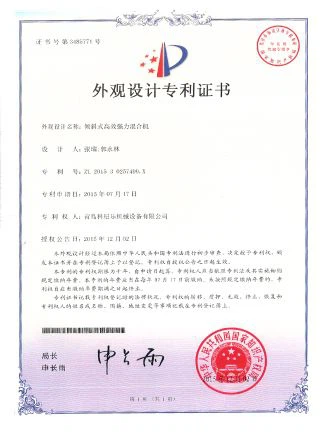
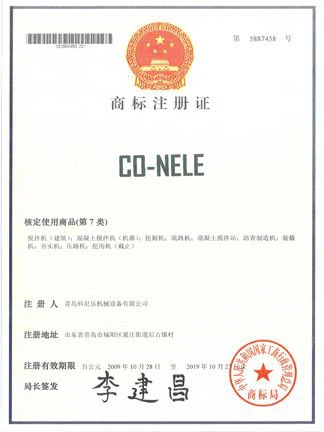
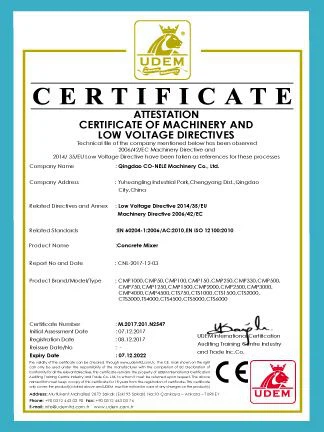
Certificate


Frequently Asked Questions
As one of the leading dry mortar mixer manufacturers and suppliers in China, we warmly welcome you to buy high quality dry mortar mixer made in China here from our factory. For more information, contact us now.
double shaft dry mortar mixer