

Our CO-NELE is professional and large manufacturer since 1993, located in Qingdao, a beautiful coastal city.
Wide Product Range
We mainly produce twin shaft mixer, double screw belt mixer, dry mortar mixer, laboratory mixer, asphalt mixer, continuous mixer, concrete batching plant, dry mortar mixing plant, fly ash solidification mixing plant and other series of equipments, etc.
Wide Range of Applications
Our products are mainly used in high - concentration tailings filling systems. Meanwhile, they can also be used for mixing crushed materials in industries such as construction, (rail)road, and bridge building. The mixing media can be selected from mineral mixtures, cement - stabilized macadam base concrete, backfill sealants, concrete, and dry mixtures, etc.
Advanced Equipment
We have professional production equipment such as Austrian IGM welding robot, PENTALASER 12000W laser cutting equipment, Japan FANUC welding robot, CNC vertical lathe, Fully automatic shot blasting and paint baking room, Digital workshop
Products Sell Well
We export to more than 80 countries like Germany, America, England, Indonesia, Thailand, Vietnam, Russia, Belarus, Brazil, South Africa, Algeria, Nigeria, Australia, UAE, Saudi Arabia, etc.


Advantages of Continuous Mixer

High Production Capacity
Continuous mix plants are capable of producing large volumes of asphalt mixture with minimal interruption, making them ideal for high-volume projects such as highway construction and airport runways.
Improved Temperature Control
The parallel flow design of continuous mix plants allows for better temperature control during the mixing process, resulting in superior asphalt quality and consistency.


Reduced Emissions
These plants are equipped with advanced pollution control devices, such as baghouse filters, that minimize emissions and environmental impact.
Enhanced Efficiency
Continuous mix plants operate at a steady pace, reducing downtime and maximizing productivity. This efficiency translates to faster project completion times and lower overall costs.

Types of Continuous Mixer
Drum Mixers
Drum mixers, commonly used in various construction projects, efficiently mix concrete by rotating the drum around its axis.
Pan Mixers
Unlike other mixers, pan mixers work by rotating a circular pan, with the blades fixed in place, pushing the concrete materials in a circular motion and downwards, ensuring a consistent mix.
Continuous Mixers
In contrast to batch mixers, continuous mixers supply and mix concrete materials with unparalleled consistency, ensuring a steady flow of concrete for large-scale construction projects.
Twin-Shaft Mixers
Shifting focus to Twin-Shaft Mixers, these machines offer a robust solution for high-quality concrete mixing with their dual-axis operation, enhancing the efficiency and consistency of the mix.
Volumetric Mixers
Unlike traditional mixers, volumetric mixers serve as mobile batching plants, capable of offering custom mix designs on the fly. This adaptability means you can adjust the concrete’s properties according to the specific needs of the project at hand, without the risk of producing excess material that might go to waste.
Applications of Continuous Mixer
Adhesives and Sealants
The adhesive and sealant industry relies heavily on effective mixing to ensure the proper blending of miscible fluids and the dispersion of high-viscosity, dissimilar materials.
Batteries and Electronics
In the battery and electronics industry, mixers play a vital role in producing materials such as aluminum oxide, silicone gels, pastes, slurries, and conductive inks.
Medical Cannabis
In medical cannabis production, mixers are essential for blending emulsions and solutions that contain hash oil, CBD, THC, and other cannabinoids. High-speed dispersers are employed for cannabinoid extraction, ensuring effective breakdown and blending.
Cosmetics
The cosmetics industry relies on high-quality mixers to produce its sensitive and intricate products. Mixers are crucial for achieving the desired consistency and texture of cosmetic solutions.
Food Industry
The food industry relies heavily on mixers for all stages of product production, as mixing is fundamental to achieving quality in food products.
Plastics and Composites
The plastics and composites industry depends on efficient and effective mixing to produce a wide range of products. The production of polyamides, plastisols, and injection molding formulations involves precise blending and mixing processes.
Inks, Paints, and Coatings
Among the many mixing and blending processes, those used in ink, paint, and coating production are among the most demanding. To achieve proper bonding between the ink, paint, or coating and a surface, the mixture must be created with the highest precision and accuracy.
Chemical Industry
As with pharmaceuticals, food, and cosmetics, the chemical industry depends on proper mixing for the success of its products. High to low viscosity mixing is used for dry blending, particle size reduction, emulsification, homogenization, and powder reduction.
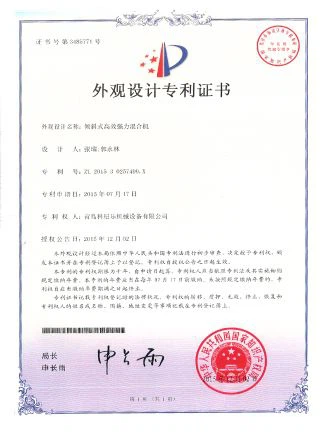
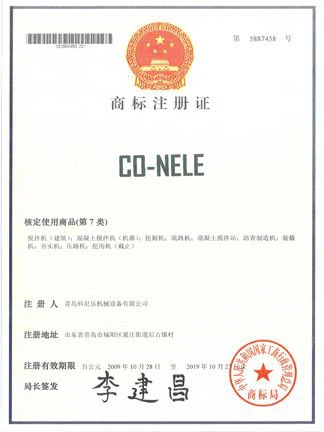
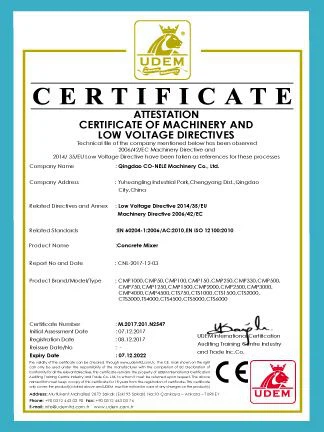
Certificate


Frequently Asked Questions
As one of the leading continuous mixer manufacturers and suppliers in China, we warmly welcome you to buy high quality continuous mixer made in China here from our factory. For more information, contact us now.
continuous mixer for powder mixing, continuous mixing raw material, continuous mixing drying