

Hey there! I'm a supplier of modular concrete plants, and today I'm gonna walk you through how these amazing machines work. Modular concrete plants are super popular in the construction industry because they're flexible, easy to set up, and can produce high - quality concrete. So, let's dive right in!
1. Raw Material Storage
First off, a modular concrete plant needs a place to store all the raw materials. These materials mainly include cement, aggregates (like sand and gravel), water, and additives.
Cement is usually stored in silos. These silos are big, tall containers that keep the cement dry and free from contamination. They come in different sizes, depending on the production capacity of the plant. Aggregates are stored in bins. These bins are designed to hold different sizes and types of aggregates separately. This way, the right amount of each aggregate can be measured accurately for the concrete mix.
Water is stored in a water tank. The tank is connected to the rest of the plant through a pipeline system. Additives, which can improve the properties of the concrete such as its setting time or strength, are stored in smaller containers. You can check out more details about our Modular Concrete Plant on our website.
2. Material Feeding
Once the raw materials are stored, it's time to feed them into the mixing process. For aggregates, there are conveyor belts or skip hoists. The conveyor belts continuously move the aggregates from the storage bins to the weighing system. Skip hoists, on the other hand, are like big buckets that lift the aggregates up to the weighing hopper.
Cement is transferred from the silos to the weighing hopper using screw conveyors. These conveyors are like big screws that rotate and push the cement forward. Water is pumped from the water tank through pipes to the weighing device. And additives are also pumped or dosed into the system according to the required amount.
3. Weighing
Accurate weighing is crucial for producing high - quality concrete. Each raw material has its own weighing hopper. The weighing hoppers are equipped with load cells, which are sensors that measure the weight of the materials.
The control system of the modular concrete plant is programmed to weigh the exact amount of each material needed for the specific concrete mix. For example, if you're making a mix with a certain ratio of cement, sand, and gravel, the weighing system will ensure that the right weights of each are added. Once the correct weight is reached, the material flow is stopped, and the next step can begin.
4. Mixing
After all the materials are weighed, they are discharged into the mixer. There are different types of mixers used in modular concrete plants, such as twin - shaft mixers and planetary mixers.
Twin - shaft mixers have two parallel shafts with mixing blades attached. These shafts rotate in opposite directions, which creates a strong mixing action. The materials are thoroughly mixed as they are tossed and turned between the blades. Planetary mixers, on the other hand, have a rotating mixing arm that moves in a planetary motion. This type of mixer can also achieve a very homogeneous mix.
The mixing time depends on the type of concrete mix and the capacity of the mixer. Usually, it takes a few minutes to ensure that all the materials are well - blended. During the mixing process, the concrete starts to take on its final properties, like its workability and strength.
5. Discharge
Once the concrete is properly mixed, it's time to discharge it. The mixer has a discharge door at the bottom. When the mixing is complete, the door opens, and the concrete falls into a concrete truck or a conveyor that transports it to the construction site.
Some modular concrete plants are designed to discharge the concrete directly into a hopper on a truck. This makes the process quick and efficient, reducing the time between production and use of the concrete.
6. Control System
The whole operation of a modular concrete plant is controlled by a sophisticated control system. This system can be operated manually or automatically.
In the automatic mode, the control system follows a pre - programmed recipe. It controls the feeding, weighing, mixing, and discharging processes. The operator can simply input the type of concrete mix they want, and the system will take care of the rest. In the manual mode, the operator has more control over each step, which can be useful for special mixes or when making adjustments.
The control system also monitors the operation of the plant. It can detect any malfunctions, such as a blockage in the conveyor or a problem with the weighing system. Alarms will go off, and the operator can take immediate action to fix the issue.
7. Advantages of Modular Design
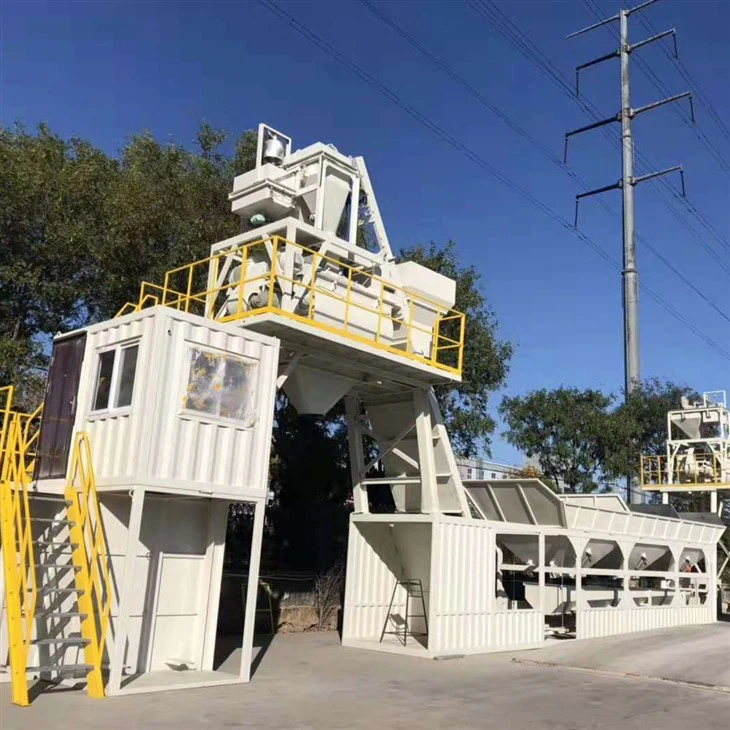
One of the best things about modular concrete plants is their modular design. This means that the plant is made up of different modules that can be easily transported and assembled.
The modules are pre - fabricated in the factory, which ensures high - quality manufacturing. They can be quickly installed on - site, reducing the construction time. If you need to move the plant to a new location, it can be disassembled and reassembled with relative ease. This makes modular concrete plants a great choice for construction projects that are temporary or need to be moved around.
8. Maintenance
Like any machine, a modular concrete plant needs regular maintenance to keep it running smoothly. The conveyor belts need to be checked for wear and tear, and the bearings should be lubricated. The silos and bins should be inspected for any signs of corrosion or blockage.
The mixer blades need to be replaced periodically to ensure efficient mixing. The weighing sensors should be calibrated regularly to maintain accurate weighing. And the control system should be updated with the latest software to improve its performance.

Why Choose Our Modular Concrete Plants?
As a supplier, we offer high - quality modular concrete plants. Our plants are designed with the latest technology, ensuring efficient production and high - quality concrete. We have a team of experts who can provide you with professional advice on choosing the right plant for your project.
If you're in the market for a modular concrete plant, I encourage you to get in touch with us. We can have a detailed discussion about your specific requirements, whether it's the production capacity, the type of concrete mix you need, or the budget. We'll work with you to find the best solution for your construction needs.
References
- Concrete Plant Manuals from Industry Manufacturers
- Construction Industry Journals on Concrete Production Technologies